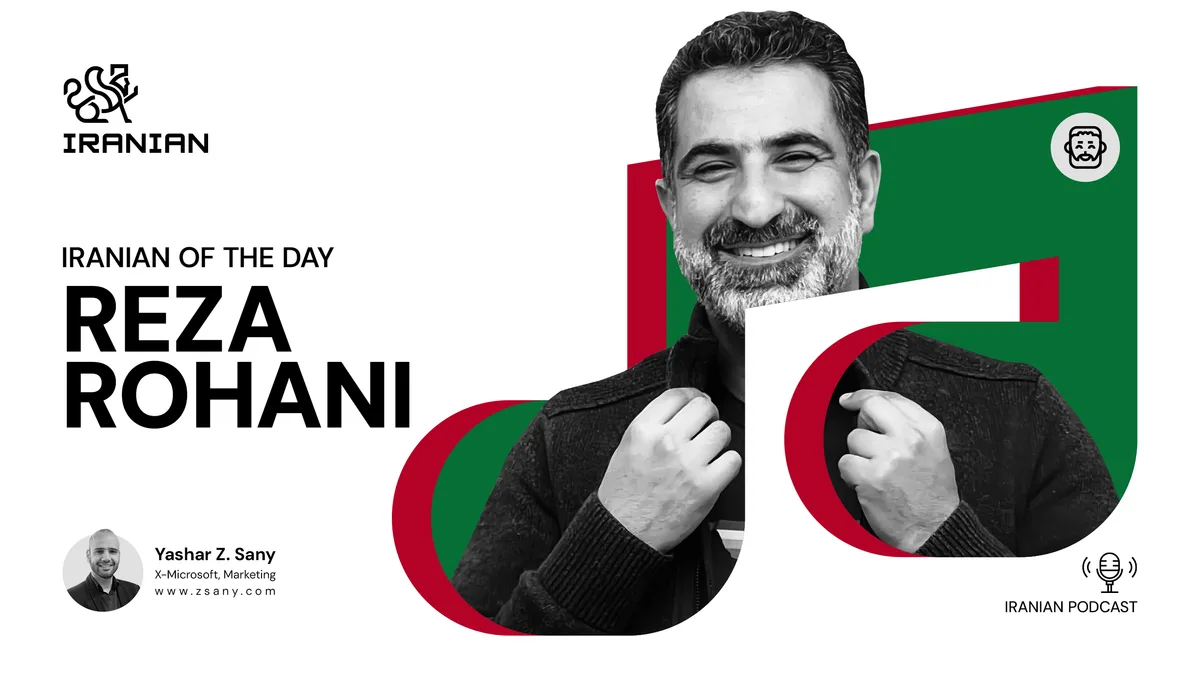
Reza Rohani has forged a remarkable career as a pianist and composer whose artistry transcends geographical and cultural boundaries. With deep roots in Iran and extensive musical training in Germany and the United States, Rohani creates a distinctive fusion of Eastern melodic traditions and Western harmonic complexity. His journey reflects not only artistic growth but also a personal resilience and dedication to music as a form of meaningful expression that connects people across cultures.
Roots in a Musical Family
Music has been an inseparable part of Rohani’s life from the very beginning. Growing up in a household where music was the heartbeat of daily life, he was introduced to the piano at a young age. His first teachers were his family; most notably his father, the celebrated Iranian composer and pianist Anoushiravan Rohani, as well as his sister and uncle. This early familial guidance set a strong foundation for his musical path before he sought formal education outside the family circle, first in Iran and then abroad.
Foundations in Germany: Classical Discipline Meets Jazz Innovation
At just 15 years old, Rohani moved to Germany, a pivotal moment that broadened his musical perspective. He completed his secondary schooling there and pursued advanced studies in both classical and jazz music. This dual focus gave him a technical rigor grounded in classical tradition, alongside the creative freedom and rhythmic vitality of jazz. His instructors were not only educators but active musicians involved in the German media and performance scene, providing Rohani with real-world insights into artistry beyond the classroom.
Germany was more than just a place of study; it was a formative period during which Rohani developed his identity as a versatile musician, equally comfortable with the precision of classical works and the improvisational spirit of jazz.
Expanding Horizons in the United States: Film Scoring and Beyond
Seeking further artistic growth, Rohani later moved to the United States for graduate studies, specializing in classical composition and film scoring. This phase allowed him to explore music as a storytelling tool, mastering the nuances of scoring for cinema and media. His work today spans a wide range, from film and instrumental compositions to pop arrangements and vocal collaborations, highlighting his ability to cross genre boundaries with ease.
Bridging Cultures Through Music
At the heart of Rohani’s work lies a desire to redefine what it means to be an “Iranian pianist.” Rather than adhering to narrow definitions, he embraces a musical identity that harmonizes the emotional depth of Persian melodies with the structural and harmonic frameworks typical of Western music. This fusion reflects his belief that these traditions are not opposites but complementary forces capable of creating a unique and universally appealing sound.
Through his compositions, Rohani invites audiences from various cultural backgrounds to experience a shared emotional space, transforming music into a bridge rather than a barrier.
Living Between Worlds: Challenges and Growth
Rohani’s years abroad have been both enriching and challenging. His thirteen years in Germany were crucial for his artistic formation but also marked by personal sacrifices, including time spent away from family. Returning to Iran to perform and compose proved difficult as political and social constraints, especially restrictions on collaborating with female vocalists, increasingly limited his creative freedom.
The cancellation of a major concert in Iran just before a sold-out audience was a stark reminder of these limitations. This event became a catalyst for his decision to relocate permanently to the United States in 2014, where he found a more supportive environment for his artistic endeavors.
The Creative Process: Balancing Intention and Inspiration
Rohani’s approach to composing is fluid, shaped by both deliberate planning and spontaneous inspiration. Some compositions arise from specific commissions or projects, crafted carefully to meet narrative or thematic requirements. Others emerge organically during quiet moments at the piano, sometimes inspired by dreams or fleeting melodic ideas. He places great importance on capturing these moments before they dissipate, a testament to his sensitivity as a creative artist.
This balance between discipline and intuition is a defining feature of his music, allowing his compositions to convey both technical sophistication and emotional authenticity.
A Wide Musical Palette
While his training is rooted in classical music, Rohani’s listening and influences are diverse. He appreciates a broad spectrum of sounds, from the classical grandeur of Brahms to the contemporary rhythms and textures of pop icons like Dua Lipa. This eclecticism informs his work, which resists confinement within any single genre and prioritizes emotional expression above labels.
Among his compositions, “Rafiq” and “Sweet As You Are” hold special significance for Rohani, embodying the emotional truths he aims to communicate through his music.
Collaborations and Shared Stages
Rohani values collaboration as an essential part of his artistic journey. His enduring partnership with vocalist Sara Naeini is a highlight, marked by mutual artistic respect and creative synergy. He has also worked alongside celebrated Iranian artists such as Googoosh, Martik, and Nima Masiha, each collaboration enriching his musical vocabulary.
A particularly memorable experience occurred in Irvine, California, where Rohani shared the stage with his father and Naeini in a spontaneous performance that resonated deeply with the audience, symbolizing a beautiful confluence of family, culture, and music.
Mentoring the Next Generation
Beyond performance, Rohani has played a significant role in nurturing emerging talent. His involvement as a judge on Stage, a Persian-language talent show on Manoto TV, stands out as an opportunity to guide young musicians. He appreciates the show’s professional production values and its impact on raising the profile of Persian music internationally.
As a mentor, Rohani emphasizes not only technical skills but also the emotional and conceptual aspects of performance, helping artists develop a well-rounded understanding of their craft.
Lessons from a Musical Legacy
Although his father rarely offered direct advice, Rohani credits much of his own work ethic and artistic discipline to observing Anoushiravan Rohani’s consistent dedication. This silent example of perseverance and focus has had a profound influence on Reza’s approach to both music and life.
Interests Beyond Music: The Cosmos and Cultural Awareness
Despite his primary focus on music, Rohani harbors a keen interest in astrophysics and science. He admires the exploration of the universe and the quest for knowledge, but his ultimate goal remains rooted in creating music that resonates deeply and endures.
He also stresses the importance of societal awareness, viewing cultural, scientific, and social consciousness as essential steps toward progress, especially within Iran.
Words of Wisdom for Emerging Artists
To young musicians aspiring to follow in his footsteps, Rohani offers straightforward advice: pursue music only if it is a true passion. For him, artistic endeavor is not about financial gain but about emotional connection, fulfillment, and authentic expression. The greatest reward, he believes, lies in the love that music can inspire between artist and audience.