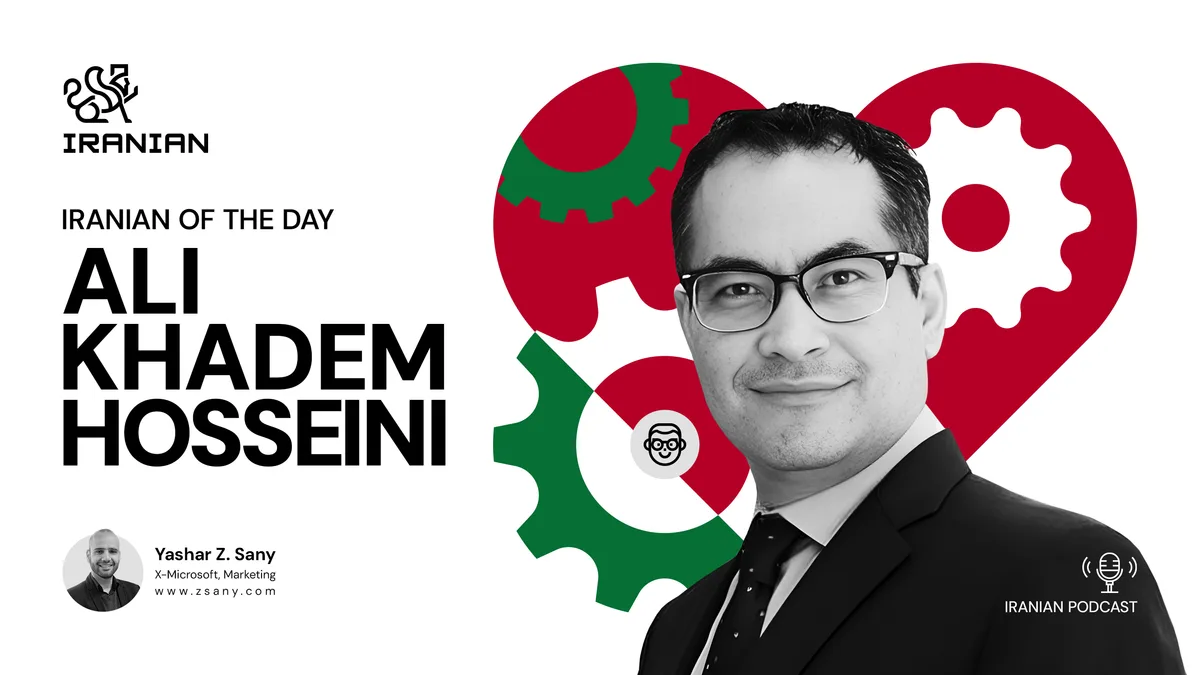
Dr. Ali Khademhosseini is widely recognized as a visionary in bioengineering and regenerative medicine. In a recent conversation, he shared the story behind his scientific achievements, the values that guide his work, and his aspirations for the future. His journey, spanning continents, disciplines and sectors, reflects a deep commitment to bringing laboratory discoveries into the everyday world.
Early Life and Educational Shift
Dr. Khademhosseini’s path began in Iran, but took a pivotal turn when he moved to Canada at the age of eleven. His early academic interests led him to chemical engineering at the University of Toronto. However, it wasn’t long before he discovered a deeper passion for innovation in the life sciences, prompting a switch to bioengineering; a decision that would define his future.
Launching a Career in Research
His scientific career gained momentum at the Massachusetts Institute of Technology (MIT), where he pursued a PhD under the mentorship of renowned tissue engineer Professor Bob Langer. Dr. Khademhosseini credits Langer not just as a guide, but as an enduring inspiration; someone whose blend of intellectual brilliance, humility, and tireless dedication left a lasting impact on generations of researchers.
Bridging Academia and Industry
After completing his PhD in 2005, Dr. Khademhosseini joined the faculties of MIT and Harvard. There, he advanced research in biomaterials and engineered tissues aimed at improving human health. But he didn’t stop at academic achievement. In 2017, he moved to Los Angeles and briefly joined UCLA before founding the Terasaki Institute for Biomedical Innovation, a research hub focused on turning ideas into practical solutions.
He also took an unconventional detour for a scientist: a year at Amazon. This corporate experience gave him a fresh perspective on leadership, scalability, and the importance of systems thinking; insights that now influence how he runs his research institute. Rather than limiting science to the pages of academic journals, Dr. Khademhosseini wants it to improve real lives.
Translational Science as a Mission
Dr. Khademhosseini is a vocal critic of academia’s tendency to favor publication over implementation. He argues that scientific research should not end in the lab, it must be translated into products, therapies, and startups that solve real-world problems.
At the Terasaki Institute, every project starts with a question: How will this help people? His team focuses on translational science, designing studies with commercialization in mind. By creating clearer pathways from discovery to market, he believes researchers can increase success rates and deliver greater impact to patients and society.
Lab-Grown Meat: Innovation for the Planet
One of his standout initiatives is the development of cellular meat, created by culturing animal cells in the lab. Unlike plant-based alternatives, this lab-grown meat replicates the taste and texture of traditional meat while dramatically cutting environmental costs; reducing land use, water consumption, and greenhouse gas emissions. The project was so promising, it has since spun off into its own company; an example of science fueling sustainability.
Engineering Organs: A Future Within Reach
Dr. Khademhosseini is currently focused on one of regenerative medicine’s most ambitious goals: rebuilding human organs like the heart and liver. These organs are especially challenging because they must be functional immediately upon transplantation and require dense vascular systems. Using advanced tools like 3D bioprinting, his team is working toward the dream of creating viable, transplantable organs; bringing science fiction closer to reality.
From Research Bench to Hospital Bed
A compelling success story from his lab involves a material developed to stop internal bleeding and prevent aneurysms from rupturing. After extensive testing in animal models and securing FDA approval, the material is now being used in clinical settings. It’s a rare but powerful example of science crossing the long, difficult bridge from experiment to life-saving medical application.
The Next Era: Personalized Medicine
Dr. Khademhosseini sees the future of healthcare in personalized medicine, treatments tailored to an individual’s genetic makeup. With tools like genome sequencing, organ-on-a-chip technology, and personalized cell cultures, doctors will be better equipped to predict which treatments will work best for each patient, making therapies more precise, effective, and safe.
Leveraging AI to Tame Big Data
One of the major challenges in personalized medicine is managing vast amounts of genetic and biological data. Dr. Khademhosseini sees artificial intelligence (AI) as an essential ally in decoding this complexity. AI can help analyze patterns, identify new treatment targets, and apply insights at the cellular and tissue levels; opening doors to treating diseases like diabetes or repairing damaged tissues more efficiently.
Words of Wisdom for Young Scientists
To students and aspiring researchers, Dr. Khademhosseini offers straightforward advice: make sure you’re truly passionate about science. The road is long and demanding, requiring patience, resilience, and relentless curiosity. He encourages students to aim high academically, publish meaningful research, and approach their careers with seriousness and heart.
Embracing a Global Human Perspective
While Dr. Khademhosseini remains proud of his Iranian heritage, he champions a broader view of humanity. He believes collaboration thrives when people are seen as individuals, not defined solely by nationality. He encourages Iranians, especially those in the global scientific community, to support each other, while also building bridges with people of all backgrounds.
A Legacy of Real-World Science
At his core, Dr. Khademhosseini is committed to using science not just to expand knowledge, but to solve problems. Whether it's through regenerative medicine, sustainable food innovations, or precision healthcare, his work aims to improve the quality of life for people around the world.
His vision? A world where science leaves the lab, enters daily life, and transforms it for the better. And through his work, he hopes to inspire future generations to do the same.